Medical Negligence & Death of Doctor: Do Legal Claims Survive?
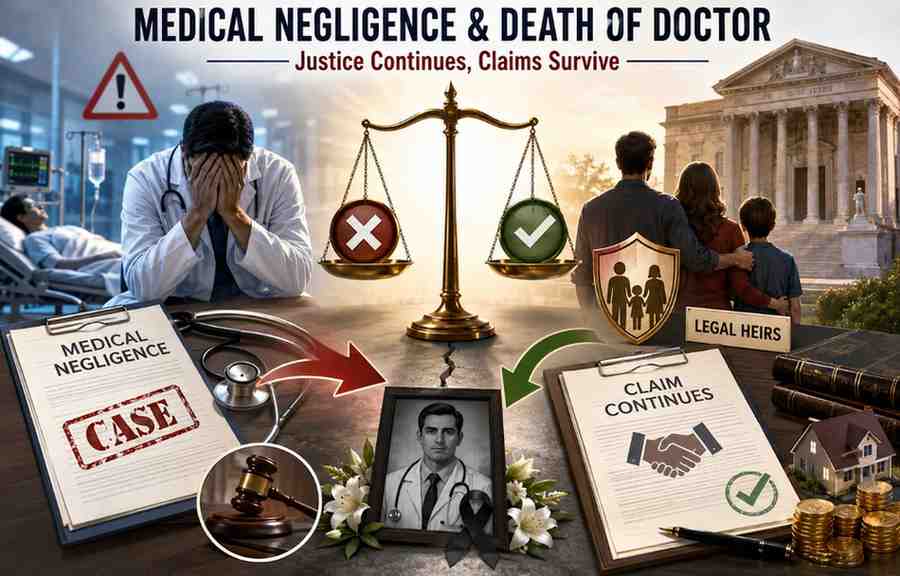 After a doctor’s death, criminal cases end—but civil/consumer claims continue against legal heirs, limited to inherited estate.
The issue is trending after the Supreme Court in Kumud Lal v. Suresh Chandra Roy (Dead) through LRs & Others clarified that in medical negligence cases, proceedings under the Consumer Protection Act can continue even after the doctor’s death, by bringing legal representatives (LRs) on record.
Legal Issue:
Whether a medical negligence claim survives after the death of the doctor, and to what extent legal heirs are liable.
A patient undergoes treatment, trusting the doctor completely. Unfortunately, due to alleged negligence, the patient suffers serious harm or even death. The family approaches a consumer court seeking compensation. The case begins. Evidence is presented. But during the proceedings, the accused doctor passes away.
At this stage, an important legal question arises: Does the case end here?
Traditionally, under common law, there was a rule: “personal action dies with the person.” This meant personal claims ended with death. However, Indian law has modified this rule.
The Supreme Court, in Kumud Lal v. Suresh Chandra Roy, clarified that:
1. Death does not end all claims.
2. Under Section 306 of the Indian Succession Act, 1925, legal representatives (LRs) of the deceased can be brought on record.
3. Proceedings can continue under the Consumer Protection Act (1986 & 2019).
However, there is an important limitation:
●The liability of legal heirs is not personal.
● It is limited only to the estate inherited from the deceased doctor.
The Court also explained an important distinction:
Personal injury claims (purely personal wrongs) may abate (end) and the claims against estate (like compensation) will survive and continue.
Procedurally, under Order XXII of the CPC, courts allow substitution of legal representatives to continue the case.
Thus, even after the doctor’s death, justice does not stop—the claim continues, but only against the estate, not personal liability of heirs.
Landmark Cases:
1. Kumud Lal v. Suresh Chandra Roy (Dead) through LRs & Ors. (2023 SCC OnLine SC)
Held: Legal heirs can be impleaded in consumer cases after doctor’s death.
Liability limited to inherited estate.
2. Jacob Mathew v. State of Punjab, (2005) 6 SCC 1
Criminal negligence requires **gross negligence.
3. Indian Medical Association v. V.P. Shantha, (1995) 6 SCC 651
Medical services fall under Consumer Protection Act.
4. Spring Meadows Hospital v. Harjol Ahluwalia, (1998) 4 SCC 39
Hospitals are vicariously liable.
Importance:
1. Ensures justice is not defeated by death of doctor.
2. Protects victims’ right to compensation.
3. Limits unfair burden on legal heirs.
4. Strengthens consumer protection in healthcare.
Exam Snapshot:
1. Old Rule: “Actio personalis moritur cum persona” (personal action dies).
2. Indian Law modifies it → Claims can survive.
3. Section 306, Indian Succession Act → Survival of claims.
4. Order XXII CPC → Substitution of LRs.
5. Liability of heirs → Only up to inherited estate.
6. Criminal case → Ends; Civil/Consumer case → Continues.
नेग्लिजेंस और डॉक्टर की मृत्यु: क्या केस जारी रहेगा? सुप्रीम कोर्ट की स्पष्टता
डॉक्टर की मृत्यु के बाद आपराधिक केस खत्म हो जाता है, लेकिन उपभोक्ता/सिविल केस कानूनी वारिसों के खिलाफ जारी रह सकता है—पर केवल विरासत तक।
हाल ही में सुप्रीम कोर्ट ने Kumud Lal बनाम Suresh Chandra Roy केस में स्पष्ट किया कि डॉक्टर की मृत्यु के बाद भी मेडिकल नेग्लिजेंस के केस Consumer Protection Act के तहत जारी रह सकते हैं, और कानूनी वारिसों को पक्षकार बनाया जा सकता है।
कानूनी मुद्दा
क्या डॉक्टर की मृत्यु के बाद मेडिकल नेग्लिजेंस का दावा जारी रहता है, और वारिसों की जिम्मेदारी कितनी होती है?
एक मरीज डॉक्टर पर भरोसा करके इलाज करवाता है। लेकिन डॉक्टर की लापरवाही के कारण उसे गंभीर नुकसान होता है या उसकी मृत्यु हो जाती है। परिवार न्याय के लिए उपभोक्ता अदालत में केस करता है। सुनवाई शुरू होती है, लेकिन बीच में डॉक्टर की मृत्यु हो जाती है। अब सवाल उठता है: क्या केस खत्म हो जाएगा?
पुराने अंग्रेजी कानून में एक सिद्धांत था:
“Actio personalis moritur cum persona” यानी व्यक्ति के साथ व्यक्तिगत दावा खत्म हो जाता है।
लेकिन भारत में यह नियम पूरी तरह लागू नहीं है।
सुप्रीम कोर्ट ने Kumud Lal केस में कहा:
●डॉक्टर की मृत्यु से सभी दावे खत्म नहीं होते।**
●Indian Succession Act, 1925 की धारा 306 के तहत, मृत व्यक्ति के कानूनी वारिस (LRs) को केस में शामिल किया जा सकता है।
● केस Consumer Protection Act (1986/2019) के तहत जारी रहेगा।
लेकिन एक महत्वपूर्ण सीमा है:
●वारिसों की व्यक्तिगत जिम्मेदारी नहीं होगी।
● उनकी जिम्मेदारी केवल उतनी ही होगी जितनी संपत्ति (estate) उन्हें डॉक्टर से मिली है।
कोर्ट ने यह भी स्पष्ट किया:
Personal injury claims → खत्म हो सकते हैं (abatement)।
Estate से जुड़े claims (मुआवज़ा) → जारी रहते हैं।
प्रक्रियात्मक रूप से, CPC के Order 22 के तहत LRs को जोड़ा जाता है।
इस प्रकार, डॉक्टर की मृत्यु के बाद भी न्याय की प्रक्रिया जारी रहती है।
लैंडमार्क केस:
1. Kumud Lal v. Suresh Chandra Roy (Dead) through LRs & Ors. (2023 SCC OnLine SC)
वारिसों को पक्षकार बनाया जा सकता है।
जिम्मेदारी केवल inherited estate तक सीमित।
2. Jacob Mathew v. State of Punjab, (2005) 6 SCC 1
आपराधिक लापरवाही के लिए “gross negligence” जरूरी।
3. Indian Medical Association v. V.P. Shantha, (1995) 6 SCC 651
मेडिकल सेवाएं Consumer Protection Act में आती हैं।
4. Spring Meadows Hospital v. Harjol Ahluwalia, (1998) 4 SCC 39
अस्पताल भी जिम्मेदार (vicarious liability)।
महत्व:
1. पीड़ित को न्याय मिलने का रास्ता खुला रहता है।
2. अस्पताल और सिस्टम की जवाबदेही तय होती है।
3. वारिसों पर अनावश्यक बोझ नहीं पड़ता।
4. उपभोक्ता अधिकार मजबूत होते हैं।
परीक्षा के लिए मुख्य बिंदु:
1.पुराना नियम: Personal action dies with person।
2. भारत में संशोधित → claims survive।
3. धारा 306, Indian Succession Act लागू।
4. Order 22 CPC → LRs की substitution।
5. वारिसों की liability → केवल inherited estate तक।
6. Criminal case खत्म, Civil/Consumer case जारी।