Women’s Representation in State Bar Councils: Supreme Court Asks Attorney General to Examine Proposal to Increase Membership
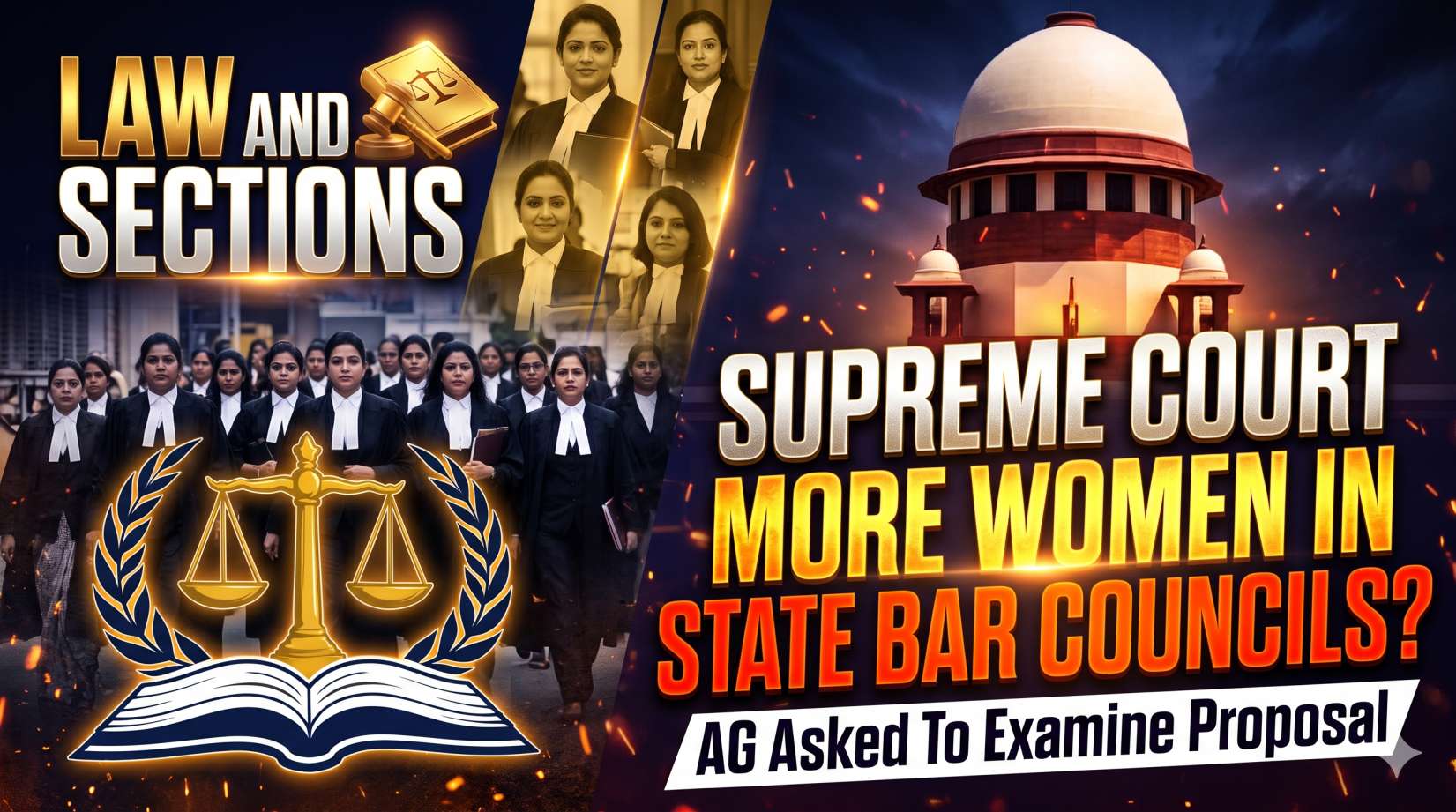
Summary (One Line): The Supreme Court has asked the Attorney General of India to consider a proposal to increase the statutory strength of State Bar Councils amid questions about implementing 30% representation for women advocates.
1. Why in News?
On 1 October 2026, the Supreme Court of India asked Attorney General R. Venkataramani to consider a proposal to increase the statutory number of elected members in State Bar Councils. The issue arose in Rohit Pandey v. Union of India, W.P. (C) No. 1218 of 2026.
The petitioner questioned the existing limit under Section 3(2)(b) of the Advocates Act, 1961, in the context of the Supreme Court’s directions for 30% representation of women advocates in State Bar Councils. The Court asked the Attorney General to examine the proposal, keeping in mind the statutory framework and the limits of judicial power.
The development is important because it concerns two issues: improving women’s participation in the governance of the legal profession and ensuring that the composition of State Bar Councils remains consistent with the law. The Court did not finally decide the petitioner’s challenge to the election of a particular woman candidate. <Cite refs={["turn401921view0","turn401921view1"]}/>
Case details:
Case title: Rohit Pandey v. Union of India
Case number: W.P. (C) No. 1218 of 2026
Diary number: 57731 of 2026
Order date: 1 October 2026
Bench: Justice Joymalya Bagchi and Justice V. Mohana
Court: Supreme Court of India
2. Legal Issue
The main legal questions are:
Should the statutory strength of State Bar Councils be increased to accommodate the growing electorate and improve representation?
How should the Supreme Court’s direction for 30% representation of women advocates be implemented within the framework of the Advocates Act, 1961?
Can the Court use Article 142 of the Constitution to address a problem where the proposed solution may require a change in legislation or policy?
How can women’s representation be ensured without creating uncertainty about the lawful composition and election of State Bar Councils?
3. Full Story: What Happened?
State Bar Councils are statutory bodies established under the Advocates Act, 1961. They perform important functions concerning the legal profession, including the enrolment of advocates and disciplinary proceedings. Their composition determines how advocates participate in the professional self-governance of the legal community.
The Supreme Court addressed the under-representation of women advocates in Yogamaya M.G. v. Union of India. By its order dated 8 December 2025, the Court directed that women should occupy 30% of the total seats in the relevant State Bar Councils. Under the arrangement laid down in that order, 20% representation was to be secured through election and 10% through co-option. The order also allowed the Bar Council of India and State Bar Councils to place proposals before the Court regarding the strength and inclusiveness of the Councils. <Cite refs={["turn401921view1"]}/>
However, questions arose about implementing this arrangement under the existing statutory framework. Section 3(2)(b) of the Advocates Act, 1961, prescribes the number of elected members according to the size of a State Bar Council’s electorate:
Fifteen elected members where the electorate does not exceed 5,000.
Twenty elected members where the electorate exceeds 5,000 but does not exceed 10,000.
Twenty-five elected members where the electorate exceeds 10,000. <Cite refs={["turn401921view3"]}/>
The issue came before the Supreme Court through a petition filed by advocate Rohit Pandey, who had contested the 2026 Bar Council of Delhi elections. According to the petition, he received 2,259 votes but narrowly missed election to the 25-member elected body. He questioned the election outcome after a woman candidate with fewer votes was declared elected under the arrangement for women’s representation. These were the petitioner’s claims and were not a final finding by the Court. <Cite refs={["turn401921view0"]}/>
On 1 October 2026, a Bench comprising Justice Joymalya Bagchi and Justice V. Mohana asked Attorney General R. Venkataramani to consider the proposal to increase the statutory strength of State Bar Councils. The Court acknowledged that judicial power has limits and indicated that the issue required appropriate consideration within the legal framework. It also indicated that it could consider the matter further if the Attorney General took a contrary view.
The order followed the approach taken on 2 September 2026 in M. Varadhan v. Union of India, where the Court considered issues relating to the composition of State Bar Councils and the Bar Council of India. In those proceedings, the Court noted that policy decisions concerning the structure of these bodies required consideration, and the Attorney General and Solicitor General were to be associated with the policy-making process. <Cite refs={["turn401921view4","turn401921view0"]}/>
The important point is that the Court did not cancel the 30% representation direction. Nor did it finally decide whether the individual election challenged by Rohit Pandey was unlawful. Instead, it asked the Attorney General to consider the broader question of increasing the statutory strength of State Bar Councils.
Any change to the statutory limit must follow the appropriate legal process. The matter therefore involves both the objective of meaningful representation for women advocates and the need to respect the existing statutory framework.
4. Landmark Cases and Relevant Legal Provisions
1. Yogamaya M.G. v. Union of India
Citation: W.P. (C) No. 581 of 2024, Supreme Court of India, order dated 8 December 2025.
Principle: The Supreme Court directed that women should occupy 30% of the total seats in the relevant State Bar Councils, with 20% to be filled through election and 10% through co-option under the arrangement set out in the order.
Importance: This is the central proceeding behind the present debate about women’s representation in State Bar Councils.
2. M. Varadhan v. Union of India
Citation: W.P. (C) No. 1049 of 2026 and connected W.P. (C) No. 1092 of 2026, Supreme Court of India, order dated 2 September 2026.
Principle: The Court considered issues relating to the composition of State Bar Councils and the Bar Council of India. The proceedings addressed the need for policy-level consideration of the structure and membership of these bodies.
Importance: This order provides the background to the later request that the Attorney General examine the proposal to increase the statutory strength of State Bar Councils.
3. Rohit Pandey v. Union of India
Citation: W.P. (C) No. 1218 of 2026, Diary No. 57731 of 2026, Supreme Court of India, order dated 1 October 2026.
Principle: The Court asked the Attorney General to consider the proposal to increase the statutory strength of State Bar Councils.
Importance: The order highlights the need to consider women’s representation alongside the statutory provisions governing the composition of Bar Councils. It did not finally determine the petitioner’s challenge to an individual election result.
Relevant Legal Provisions
Section 3(2)(b), Advocates Act, 1961: It prescribes the number of elected members of a State Bar Council according to the size of its electorate: 15, 20 or 25 members.
Section 4, Advocates Act, 1961: It deals with the constitution of the Bar Council of India.
Article 14, Constitution of India: It guarantees equality before the law and equal protection of the laws. It provides a wider constitutional context for discussions about fair representation, but the order of 1 October 2026 should not be described as a final ruling on an Article 14 challenge.
Article 142, Constitution of India: It empowers the Supreme Court to pass orders necessary to do complete justice in a matter before it. Its application must be understood in the context of the Constitution, applicable legislation and the facts of the case.
5. Importance: Impact on Advocates and the Public
This development matters for several reasons:
Women’s participation: Greater representation can help women advocates participate more effectively in decisions affecting the legal profession.
Fair professional governance: Representative Bar Councils can better reflect the diversity of the legal community.
Clear election rules: Clarity about elected seats and co-option can reduce disputes concerning election outcomes and Council composition.
Respect for legislation: Any increase in the statutory strength of a Bar Council must follow the appropriate legal process.
Public confidence: Transparent and inclusive professional institutions can strengthen trust in the administration of the legal profession.
The issue is not only about the number of seats. It is also about ensuring meaningful participation for women advocates while maintaining a lawful and transparent system for constituting professional regulatory bodies.
6. Exam Snapshot: Judiciary and UPSC
Court: Supreme Court of India.
Main case: Rohit Pandey v. Union of India.
Order date: 1 October 2026.
Bench: Justice Joymalya Bagchi and Justice V. Mohana.
Relevant statute: Advocates Act, 1961.
Section 3(2)(b): Provides for 15, 20 or 25 elected members depending on the size of the electorate.
Section 4: Concerns the constitution of the Bar Council of India.
Article 14: Equality before the law and equal protection of the laws.
Article 142: Supreme Court’s power to do complete justice.
Women’s representation: The order dated 8 December 2025 in Yogamaya M.G. v. Union of India provided for 30% representation in the relevant State Bar Councils, with 20% through election and 10% through co-option.
Key distinction: Asking the Attorney General to consider increasing membership is not the same as finally amending the Advocates Act.
Status of the 1 October order: The Court did not cancel the 30% representation direction or finally decide the individual election challenge.
Exam takeaway: This matter illustrates the relationship between judicial directions, statutory limits, policy decisions and women’s representation in professional regulatory bodies.
राज्य बार काउंसिलों में महिलाओं के प्रतिनिधित्व पर सुप्रीम कोर्ट की पहल: सदस्य संख्या बढ़ाने के प्रस्ताव पर अटॉर्नी जनरल से विचार करने को कहा
सारांश (एक लाइन में): सुप्रीम कोर्ट ने राज्य बार काउंसिलों में निर्वाचित सदस्यों की वैधानिक संख्या बढ़ाने के प्रस्ताव पर अटॉर्नी जनरल से विचार करने को कहा है। यह मुद्दा महिला अधिवक्ताओं के 30% प्रतिनिधित्व को लागू करने से भी जुड़ा है।
1. खबरों में क्यों?
1 अक्टूबर 2026 को भारत के सुप्रीम कोर्ट ने अटॉर्नी जनरल आर. वेंकटरमणी से राज्य बार काउंसिलों में निर्वाचित सदस्यों की वैधानिक संख्या बढ़ाने के प्रस्ताव पर विचार करने को कहा। यह मामला Rohit Pandey v. Union of India, रिट याचिका संख्या W.P. (C) No. 1218 of 2026 में सामने आया।
याचिकाकर्ता ने अधिवक्ता अधिनियम, 1961 की धारा 3(2)(b) के तहत निर्धारित निर्वाचित सदस्यों की संख्या पर सवाल उठाया। यह विवाद राज्य बार काउंसिलों में महिलाओं को 30% प्रतिनिधित्व देने के सुप्रीम कोर्ट के निर्देशों के संदर्भ में सामने आया।
यह घटनाक्रम इसलिए महत्वपूर्ण है क्योंकि इसमें दो प्रमुख विषय जुड़े हैं। पहला, कानूनी पेशे से संबंधित संस्थाओं में महिलाओं की भागीदारी बढ़ाना और दूसरा, राज्य बार काउंसिलों का गठन मौजूदा कानून के अनुसार सुनिश्चित करना। कोर्ट ने किसी विशेष महिला उम्मीदवार के चुनाव को चुनौती देने वाली याचिका का अंतिम फैसला नहीं किया। <Cite refs={["turn401921view0","turn401921view1"]}/>
मामले का विवरण:
मामले का नाम: Rohit Pandey v. Union of India
केस नंबर: W.P. (C) No. 1218 of 2026
डायरी नंबर: 57731 of 2026
आदेश की तारीख: 1 अक्टूबर 2026
पीठ: न्यायमूर्ति जॉयमाल्या बागची और न्यायमूर्ति वी. मोहना
न्यायालय: भारत का सुप्रीम कोर्ट
2. कानूनी मुद्दा
इस मामले में मुख्य कानूनी सवाल हैं:
क्या राज्य बार काउंसिलों में मतदाताओं की बढ़ती संख्या और बेहतर प्रतिनिधित्व की आवश्यकता को देखते हुए निर्वाचित सदस्यों की वैधानिक संख्या बढ़ाई जानी चाहिए?
अधिवक्ता अधिनियम, 1961 के तहत महिलाओं के 30% प्रतिनिधित्व के सुप्रीम कोर्ट के निर्देशों को किस प्रकार लागू किया जाना चाहिए?
यदि समाधान के लिए कानून या नीति में बदलाव की जरूरत हो, तो सुप्रीम कोर्ट संविधान के अनुच्छेद 142 के तहत अपनी शक्ति का किस सीमा तक उपयोग कर सकता है?
महिलाओं का प्रतिनिधित्व सुनिश्चित करते हुए राज्य बार काउंसिलों के गठन और चुनाव की वैधानिक व्यवस्था में स्पष्टता कैसे रखी जाए?
3. पूरी कहानी: मामला क्या है?
राज्य बार काउंसिलें अधिवक्ता अधिनियम, 1961 के तहत स्थापित वैधानिक संस्थाएँ हैं। ये अधिवक्ताओं के पंजीकरण और उनके विरुद्ध अनुशासनात्मक कार्यवाही जैसे महत्वपूर्ण काम करती हैं। इनकी संरचना यह तय करती है कि कानूनी पेशे से जुड़े निर्णयों में अधिवक्ताओं का प्रतिनिधित्व किस प्रकार होगा।
राज्य बार काउंसिलों में महिला अधिवक्ताओं के कम प्रतिनिधित्व के मुद्दे पर सुप्रीम कोर्ट ने Yogamaya M.G. v. Union of India मामले में विचार किया। 8 दिसंबर 2025 के आदेश में कोर्ट ने निर्देश दिया कि संबंधित राज्य बार काउंसिलों की कुल सीटों में महिलाओं को 30% प्रतिनिधित्व दिया जाए। इस व्यवस्था में 20% प्रतिनिधित्व चुनाव और 10% सह-नामांकन के माध्यम से पूरा किया जाना था। आदेश में बार काउंसिल ऑफ इंडिया और राज्य बार काउंसिलों को सदस्य संख्या तथा समावेशी प्रतिनिधित्व से संबंधित प्रस्ताव कोर्ट के सामने रखने की अनुमति भी दी गई थी। <Cite refs={["turn401921view1"]}/>
लेकिन इस व्यवस्था को लागू करने के दौरान मौजूदा कानून से जुड़ा सवाल सामने आया। अधिवक्ता अधिनियम, 1961 की धारा 3(2)(b) के अनुसार राज्य बार काउंसिल में निर्वाचित सदस्यों की संख्या उसके मतदाता मंडल के आकार पर निर्भर करती है:
यदि मतदाता मंडल में 5,000 तक मतदाता हैं, तो 15 निर्वाचित सदस्य होंगे।
यदि मतदाता 5,000 से अधिक लेकिन 10,000 तक हैं, तो 20 निर्वाचित सदस्य होंगे।
यदि मतदाता 10,000 से अधिक हैं, तो 25 निर्वाचित सदस्य होंगे। <Cite refs={["turn401921view3"]}/>
यह मुद्दा अधिवक्ता रोहित पांडे की याचिका के माध्यम से सुप्रीम कोर्ट पहुँचा। उन्होंने 2026 में बार काउंसिल ऑफ दिल्ली का चुनाव लड़ा था। उनकी याचिका के अनुसार, उन्हें 2,259 वोट मिले, लेकिन वे 25 निर्वाचित सदस्यों में स्थान पाने से थोड़े अंतर से चूक गए। उन्होंने चुनाव परिणाम पर सवाल उठाया क्योंकि महिलाओं के प्रतिनिधित्व की व्यवस्था के तहत उनसे कम वोट पाने वाली एक महिला उम्मीदवार को निर्वाचित घोषित किया गया था। ये याचिकाकर्ता के तर्क थे, न कि कोर्ट द्वारा अंतिम रूप से सही ठहराए गए तथ्य। <Cite refs={["turn401921view0"]}/>
1 अक्टूबर 2026 को न्यायमूर्ति जॉयमाल्या बागची और न्यायमूर्ति वी. मोहना की पीठ ने अटॉर्नी जनरल आर. वेंकटरमणी से राज्य बार काउंसिलों में निर्वाचित सदस्यों की वैधानिक संख्या बढ़ाने के प्रस्ताव पर विचार करने को कहा। कोर्ट ने यह भी स्पष्ट किया कि न्यायिक शक्ति की अपनी सीमाएँ हैं और इस मुद्दे पर मौजूदा कानून को ध्यान में रखते हुए उचित विचार आवश्यक है। यह भी कहा गया कि यदि अटॉर्नी जनरल की राय अलग होती है, तो कोर्ट इस विषय पर आगे विचार कर सकता है।
इससे पहले 2 सितंबर 2026 को M. Varadhan v. Union of India मामले में सुप्रीम कोर्ट ने राज्य बार काउंसिलों और बार काउंसिल ऑफ इंडिया की संरचना से जुड़े प्रश्नों पर विचार किया था। उस कार्यवाही में कोर्ट ने माना कि इन संस्थाओं की संरचना से संबंधित विषयों पर नीतिगत स्तर पर विचार आवश्यक है। नीति-निर्माण की प्रक्रिया में अटॉर्नी जनरल और सॉलिसिटर जनरल को भी शामिल किए जाने की बात कही गई थी। <Cite refs={["turn401921view4","turn401921view0"]}/>
इस मामले का महत्वपूर्ण पहलू यह है कि कोर्ट ने महिलाओं के 30% प्रतिनिधित्व के निर्देश को रद्द नहीं किया। उसने यह अंतिम निर्णय भी नहीं दिया कि रोहित पांडे द्वारा चुनौती दिया गया व्यक्तिगत चुनाव परिणाम गैरकानूनी था या नहीं। कोर्ट ने केवल राज्य बार काउंसिलों में निर्वाचित सदस्यों की वैधानिक संख्या बढ़ाने के व्यापक प्रस्ताव पर विचार करने को कहा।
सदस्यों की वैधानिक संख्या में बदलाव के लिए उचित कानूनी प्रक्रिया का पालन करना होगा। इसलिए इस मामले में महिला अधिवक्ताओं को सार्थक प्रतिनिधित्व देने और मौजूदा कानून का सम्मान करने, दोनों बातों पर विचार करना जरूरी है।
4. लैंडमार्क केस और संबंधित कानूनी प्रावधान
1. Yogamaya M.G. v. Union of India
साइटेशन: W.P. (C) No. 581 of 2024, सुप्रीम कोर्ट, 8 दिसंबर 2025 का आदेश।
सिद्धांत: सुप्रीम कोर्ट ने संबंधित राज्य बार काउंसिलों में महिलाओं को कुल सीटों का 30% प्रतिनिधित्व देने का निर्देश दिया। आदेश में 20% प्रतिनिधित्व चुनाव और 10% सह-नामांकन के माध्यम से पूरा करने की व्यवस्था की गई।
महत्व: राज्य बार काउंसिलों में महिलाओं के प्रतिनिधित्व को लेकर वर्तमान चर्चा का मुख्य आधार यही मामला है।
2. M. Varadhan v. Union of India
साइटेशन: W.P. (C) No. 1049 of 2026 और संबंधित W.P. (C) No. 1092 of 2026, सुप्रीम कोर्ट, 2 सितंबर 2026 का आदेश।
सिद्धांत: कोर्ट ने राज्य बार काउंसिलों और बार काउंसिल ऑफ इंडिया की संरचना से जुड़े प्रश्नों पर विचार किया। इन संस्थाओं की सदस्य संख्या और गठन के विषय में नीतिगत स्तर पर विचार की आवश्यकता पर चर्चा हुई।
महत्व: यह आदेश राज्य बार काउंसिलों की वैधानिक सदस्य संख्या बढ़ाने के प्रस्ताव पर अटॉर्नी जनरल से विचार कराने की पृष्ठभूमि समझने में मदद करता है।
3. Rohit Pandey v. Union of India
साइटेशन: W.P. (C) No. 1218 of 2026, Diary No. 57731 of 2026, सुप्रीम कोर्ट, 1 अक्टूबर 2026 का आदेश।
सिद्धांत: कोर्ट ने राज्य बार काउंसिलों में निर्वाचित सदस्यों की वैधानिक संख्या बढ़ाने के प्रस्ताव पर अटॉर्नी जनरल से विचार करने को कहा।
महत्व: यह आदेश दिखाता है कि महिलाओं के प्रतिनिधित्व के साथ-साथ बार काउंसिलों की वैधानिक संरचना पर भी विचार करना आवश्यक है। कोर्ट ने किसी विशेष चुनाव परिणाम को चुनौती देने वाली याचिका का अंतिम फैसला नहीं किया।
संबंधित कानूनी प्रावधान
अधिवक्ता अधिनियम, 1961 की धारा 3(2)(b): यह राज्य बार काउंसिलों में निर्वाचित सदस्यों की संख्या निर्धारित करती है। मतदाता मंडल के आकार के अनुसार 15, 20 या 25 निर्वाचित सदस्य हो सकते हैं।
अधिवक्ता अधिनियम, 1961 की धारा 4: यह बार काउंसिल ऑफ इंडिया के गठन से संबंधित है।
भारतीय संविधान का अनुच्छेद 14: यह कानून के समक्ष समानता और कानूनों के समान संरक्षण की गारंटी देता है। उचित प्रतिनिधित्व की चर्चा में इसका व्यापक संवैधानिक महत्व है, लेकिन 1 अक्टूबर 2026 के आदेश को अनुच्छेद 14 से जुड़ी चुनौती पर अंतिम फैसला नहीं माना जाना चाहिए।
भारतीय संविधान का अनुच्छेद 142: यह सुप्रीम कोर्ट को अपने सामने लंबित मामले में पूर्ण न्याय करने के लिए आवश्यक आदेश देने की शक्ति देता है। इस शक्ति का उपयोग संविधान, लागू कानून और मामले की परिस्थितियों के संदर्भ में समझा जाना चाहिए।
5. महत्व: अधिवक्ताओं और आम जनता पर प्रभाव
यह घटनाक्रम कई कारणों से महत्वपूर्ण है:
महिलाओं की भागीदारी: महिला अधिवक्ताओं को कानूनी पेशे से जुड़े निर्णयों में अधिक प्रभावी भूमिका मिल सकती है।
निष्पक्ष पेशेवर व्यवस्था: अधिक प्रतिनिधित्वपूर्ण बार काउंसिल कानूनी समुदाय की विविधता को बेहतर ढंग से दर्शा सकती है।
चुनाव में स्पष्टता: निर्वाचित सीटों और सह-नामांकन के स्पष्ट नियम चुनाव परिणामों तथा सदस्य संरचना से जुड़े विवाद कम कर सकते हैं।
कानून का पालन: बार काउंसिल में सदस्यों की वैधानिक संख्या बढ़ाने के लिए उचित कानूनी प्रक्रिया का पालन जरूरी है।
जनता का विश्वास: पारदर्शी और समावेशी संस्थाएँ कानूनी व्यवस्था में विश्वास मजबूत कर सकती हैं।
यह मुद्दा केवल सीटों की संख्या तक सीमित नहीं है। इसका संबंध महिला अधिवक्ताओं की सार्थक भागीदारी और पेशेवर नियामक संस्थाओं के गठन की वैध तथा पारदर्शी प्रक्रिया से भी है।
6. परीक्षा के लिए मुख्य बिंदु: Judiciary और UPSC
न्यायालय: भारत का सुप्रीम कोर्ट।
मुख्य मामला: Rohit Pandey v. Union of India।
आदेश की तारीख: 1 अक्टूबर 2026।
पीठ: न्यायमूर्ति जॉयमाल्या बागची और न्यायमूर्ति वी. मोहना।
संबंधित कानून: अधिवक्ता अधिनियम, 1961।
धारा 3(2)(b): मतदाता मंडल के आकार के आधार पर 15, 20 या 25 निर्वाचित सदस्यों की व्यवस्था।
धारा 4: बार काउंसिल ऑफ इंडिया के गठन से संबंधित।
अनुच्छेद 14: कानून के समक्ष समानता और कानूनों का समान संरक्षण।
अनुच्छेद 142: सुप्रीम कोर्ट की पूर्ण न्याय करने की शक्ति।
महिलाओं का प्रतिनिधित्व: Yogamaya M.G. v. Union of India मामले में 8 दिसंबर 2025 के आदेश ने संबंधित राज्य बार काउंसिलों में 30% प्रतिनिधित्व की व्यवस्था की, जिसमें 20% चुनाव और 10% सह-नामांकन के माध्यम से पूरा किया जाना था।
महत्वपूर्ण अंतर: अटॉर्नी जनरल से सदस्य संख्या बढ़ाने के प्रस्ताव पर विचार करने को कहना, अधिवक्ता अधिनियम में अंतिम संशोधन हो जाने के समान नहीं है।
1 अक्टूबर के आदेश की स्थिति: कोर्ट ने महिलाओं के 30% प्रतिनिधित्व के निर्देश को रद्द नहीं किया और न ही व्यक्तिगत चुनाव-विवाद का अंतिम फैसला किया।
परीक्षा के लिए याद रखें: यह मामला न्यायिक निर्देशों, वैधानिक सीमाओं, नीतिगत निर्णयों और पेशेवर नियामक संस्थाओं में महिलाओं के प्रतिनिधित्व के बीच संबंध को समझने के लिए महत्वपूर्ण है।