NJA Panel Issues Landmark Guidelines for Sensitive and Survivor-Centric Judicial Writing in Sexual Offence Cases
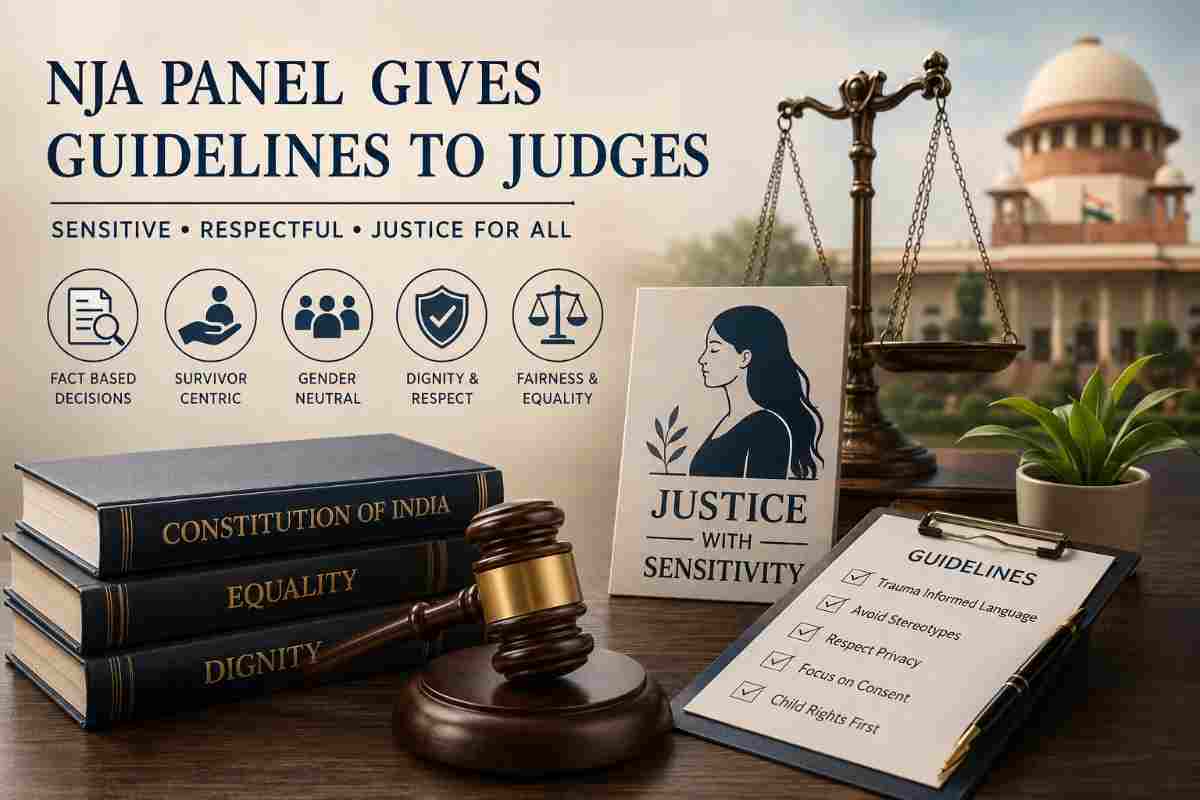
The National Judicial Academy’s Expert Committee has laid down comprehensive principles asking judges to use fact-based, gender-sensitive, trauma-informed and dignity-centred language in sexual offence cases.
Why in News
The issue is in the news after the Supreme Court accepted the report prepared by the Expert Committee constituted through the National Judicial Academy and directed that the approved handbook serve as a mandatory guiding resource for courts and other concerned authorities while dealing with sexual offences and vulnerable persons. The Supreme Court’s July 14, 2026 decision has brought renewed attention to how judges and the justice system should communicate with survivors.
The uploaded material highlights the Committee’s emphasis on avoiding patriarchal and victim-blaming expressions and adopting respectful alternatives.
Legal Issue
How should courts write judgments and conduct proceedings in sexual offence cases without relying on gender stereotypes, victim-blaming assumptions, insensitive terminology or ideas about honour, shame and morality?
The central principle is that judicial reasoning must be based on evidence, law, dignity, bodily autonomy, consent and constitutional values, rather than stereotypes or assumptions.
Background
The story began with a larger concern about the way sexual offence cases are sometimes handled in the justice system. The Supreme Court, while dealing with an Allahabad High Court order concerning an alleged sexual offence, noticed the need for greater sensitivity and compassion in judicial processes involving vulnerable persons.
On February 10, 2026, the Supreme Court directed the National Judicial Academy to constitute an Expert Committee to prepare comprehensive guidelines for judges dealing with sexual offences and similarly sensitive cases. The Court emphasised that justice should not only be legally correct but should also reflect humanity, compassion and sensitivity.
The Expert Committee subsequently prepared a detailed handbook on “Judgments and Gender”, focusing particularly on judicial writing and courtroom practices.
The Committee’s nine major principles include:
- Fact-based references — decisions should rely on evidence, testimony and forensic material rather than stereotypes.
- Careful use of terms such as “outraging modesty” — courts should focus on dignity, bodily autonomy and personal integrity.
- Trauma-informed language — delayed reporting, lack of resistance or absence of injuries should not automatically be treated as consent.
- Gender-neutral and survivor-centric language.
- “Child” or “minor” for persons below 18 years, especially in the context of protective laws.
- “Victim”, “survivor” or “complainant” instead of “prosecutrix”, wherever appropriate.
- Child-sensitive language and avoidance of sensational or moralistic observations.
- Focus on autonomy, consent and child rights.
- Recognition of psychological and physical trauma.
The handbook also provides examples of problematic expressions and more neutral alternatives. For example, courts are advised to avoid expressions relating to a woman’s “honour”, “shame”, “chastity”, “lust” or descriptions such as “helpless female”. The focus should instead remain on the legal facts, dignity, rights and bodily autonomy of the affected person.
On July 14, 2026, the Supreme Court approved the publication and directed its dissemination across courts, tribunals, judicial academies and other relevant institutions. The Court also directed police and prosecution authorities to implement the handbook while dealing with sexual offence matters.
Thus, the development is not merely about changing vocabulary. It represents an effort to ensure that the language of justice itself does not become a source of secondary harm.
Landmark Cases
1. In Re: Order dated 17.03.2025 Passed by the High Court of Judicature at Allahabad in Criminal Revision No. 1449/2024 and Ancillary Issues
2026 SCC OnLine SC 207; 2026 INSC 165
The Supreme Court set aside the controversial Allahabad High Court order and emphasised the need for sensitivity, compassion and empathy while dealing with sexual offence cases. The Court directed the National Judicial Academy to constitute an Expert Committee for comprehensive guidelines.
2. In Re: Order dated 17.03.2025 Passed by the High Court of Judicature at Allahabad in Criminal Revision No. 1449/2024 and Ancillary Issues
Miscellaneous Application No. 1998 of 2026 in Suo Moto Writ Petition (Criminal) No. 1/2025, 2026 INSC 783, decided on 14 July 2026
The Supreme Court accepted the NJA Committee’s handbook and directed its implementation and dissemination. The publication was recognised as a mandatory guiding resource in matters involving sexual offences and vulnerable persons.
3. Aparna Bhat & Anr. v. State of Madhya Pradesh & Anr.
(2021) 8 SCC 230
The Supreme Court stressed that judicial orders must not reinforce gender stereotypes or patriarchal notions. Courts must ensure that their approach remains consistent with constitutional values of equality and dignity.
4. State of Punjab v. Gurmit Singh & Ors.
AIR 1996 SC 1393; (1996) 2 SCC 384
The Supreme Court cautioned courts against allowing irrelevant considerations, stereotypes and minor discrepancies to undermine the testimony of a sexual assault survivor.
5. Lillu @ Rajesh & Anr. v. State of Haryana
AIR 2013 SC 1784; (2013) 14 SCC 643
The Supreme Court recognised the importance of dignity and privacy of survivors and rejected practices that lack scientific validity and cause further trauma.
Importance
For the common citizen, these guidelines mean that the justice system should treat people involved in sensitive cases with dignity, privacy, fairness and respect.
They are particularly important because insensitive courtroom language can discourage reporting, reinforce harmful stereotypes and cause additional emotional distress. The guidelines seek to make the justice process more humane without compromising the rights of the accused or the requirement of a fair trial.
Exam Snapshot — Judiciary/UPSC
- Institution: National Judicial Academy (NJA)
- Subject: Judicial sensitivity in sexual offence and vulnerable-person cases
- Important year: 2026
- Supreme Court direction: 10 February 2026
- Guidelines approved: 14 July 2026
- Key concept: Gender-sensitive and trauma-informed justice
- Focus: Dignity, bodily autonomy, consent, child rights and evidence
- Avoid: Gender stereotypes, victim blaming, moralistic language and references to honour/shame
- Important case: In Re: Order dated 17.03.2025..., 2026 INSC 165
- Approval order: 2026 INSC 783
- Constitutional values involved: Equality, dignity, privacy and fair procedure
यौन अपराध मामलों में न्यायिक लेखन के लिए NJA पैनल के महत्वपूर्ण दिशा-निर्देश: संवेदनशील और पीड़ित-केंद्रित भाषा पर जोर
राष्ट्रीय न्यायिक अकादमी की विशेषज्ञ समिति ने न्यायाधीशों को यौन अपराध मामलों में तथ्य-आधारित, संवेदनशील, सम्मानजनक और पीड़ित-केंद्रित भाषा अपनाने के लिए व्यापक दिशा-निर्देश दिए हैं।
खबरों में क्यों?
यह विषय चर्चा में है क्योंकि सुप्रीम कोर्ट ने राष्ट्रीय न्यायिक अकादमी द्वारा तैयार विशेषज्ञ समिति की रिपोर्ट को स्वीकार कर लिया है और यौन अपराधों तथा संवेदनशील मामलों में न्यायिक प्रक्रिया के दौरान इस दिशा-निर्देश पुस्तिका को लागू करने पर जोर दिया है। 14 जुलाई 2026 के सुप्रीम कोर्ट के निर्णय के बाद इस विषय का महत्व और बढ़ गया है।
दिए गए अध्ययन-सामग्री में भी न्यायाधीशों को ऐसे शब्दों और वाक्यों से बचने की सलाह दी गई है जो महिलाओं या पीड़ितों के प्रति रूढ़िवादी और भेदभावपूर्ण सोच को बढ़ावा दे सकते हैं।
कानूनी मुद्दा
यौन अपराध मामलों में अदालतें किस प्रकार निर्णय और कार्यवाही करें ताकि भाषा में लैंगिक रूढ़िवादिता, पीड़ित को दोष देने वाली सोच और असंवेदनशील शब्दों का प्रयोग न हो?
मुख्य विचार यह है कि न्यायिक निर्णय सबूत, कानून, गरिमा, शारीरिक स्वायत्तता, सहमति और संवैधानिक मूल्यों पर आधारित होने चाहिए, न कि सामाजिक धारणाओं या रूढ़ियों पर।
पूरी कहानी
इस पूरे मामले की शुरुआत न्यायिक प्रक्रिया में संवेदनशीलता की आवश्यकता से हुई। यौन अपराधों से जुड़े मामलों में कभी-कभी न्यायिक आदेशों या अदालत की भाषा में ऐसे शब्द दिखाई देते हैं जो पीड़ित व्यक्ति के अनुभव को समझने के बजाय सामाजिक धारणाओं और रूढ़ियों पर आधारित होते हैं।
इसी चिंता को देखते हुए सुप्रीम कोर्ट ने 10 फरवरी 2026 को राष्ट्रीय न्यायिक अकादमी को एक विशेषज्ञ समिति बनाने का निर्देश दिया। समिति को ऐसा व्यापक ढांचा तैयार करना था जिससे यौन अपराधों और अन्य संवेदनशील मामलों में न्यायाधीश अधिक संवेदनशील और मानवीय दृष्टिकोण अपना सकें।
इसके बाद विशेषज्ञ समिति ने “Judgments and Gender” नाम से एक विस्तृत पुस्तिका तैयार की। इसमें न्यायिक निर्णय लिखने और अदालत में कार्यवाही करने के लिए कई महत्वपूर्ण सिद्धांत बताए गए।
इनमें नौ प्रमुख सिद्धांत शामिल हैं:
- तथ्य-आधारित भाषा — निर्णय सबूत और गवाही पर आधारित हों।
- “Modesty” जैसे शब्दों का सावधानी से प्रयोग — ध्यान व्यक्ति की गरिमा और शारीरिक स्वायत्तता पर हो।
- Trauma-informed भाषा — देर से शिकायत करना या विरोध न करना अपने आप में सहमति नहीं माना जाना चाहिए।
- लैंगिक रूप से निष्पक्ष और पीड़ित-केंद्रित भाषा।
- 18 वर्ष से कम उम्र के लिए “Child” या “Minor” का प्रयोग।
- “Prosecutrix” के स्थान पर उचित स्थिति में “Victim”, “Survivor” या “Complainant” जैसे सम्मानजनक शब्दों का प्रयोग।
- बच्चों के प्रति संवेदनशील भाषा और सनसनीखेज या नैतिक टिप्पणी से बचना।
- स्वायत्तता, सहमति और बच्चों के अधिकारों पर ध्यान।
- मनोवैज्ञानिक और शारीरिक आघात को समझना।
समिति ने यह भी बताया कि “honour”, “shame”, “chastity”, “lust” या “helpless female” जैसे शब्द कई परिस्थितियों में गलत सामाजिक धारणाओं को मजबूत कर सकते हैं। इसलिए भाषा का ध्यान व्यक्ति की गरिमा, अधिकार और कानूनी स्थिति पर होना चाहिए।
14 जुलाई 2026 को सुप्रीम कोर्ट ने समिति की पुस्तिका को स्वीकार किया और इसके व्यापक प्रसार तथा कार्यान्वयन के निर्देश दिए। इसका उद्देश्य यह सुनिश्चित करना है कि न्याय पाने की प्रक्रिया स्वयं किसी पीड़ित व्यक्ति के लिए अतिरिक्त पीड़ा का कारण न बने।
इस प्रकार, यह केवल शब्द बदलने की बात नहीं है। इसका उद्देश्य न्याय की भाषा को अधिक निष्पक्ष, संवेदनशील, सम्मानजनक और संवैधानिक मूल्यों के अनुरूप बनाना है।
लैंडमार्क केस
1. In Re: Order dated 17.03.2025 Passed by the High Court of Judicature at Allahabad in Criminal Revision No. 1449/2024 and Ancillary Issues
2026 SCC OnLine SC 207; 2026 INSC 165
सुप्रीम कोर्ट ने इलाहाबाद हाई कोर्ट के विवादित आदेश को रद्द किया और यौन अपराध मामलों में संवेदनशीलता, करुणा और सहानुभूति की आवश्यकता पर जोर दिया। इसी मामले में राष्ट्रीय न्यायिक अकादमी को विशेषज्ञ समिति बनाने का निर्देश दिया गया।
2. In Re: Order dated 17.03.2025 Passed by the High Court of Judicature at Allahabad in Criminal Revision No. 1449/2024 and Ancillary Issues
Miscellaneous Application No. 1998 of 2026 in Suo Moto Writ Petition (Criminal) No. 1/2025, 2026 INSC 783, decided on 14 July 2026
सुप्रीम कोर्ट ने NJA की विशेषज्ञ समिति द्वारा तैयार पुस्तिका को स्वीकार किया और इसके प्रसार तथा कार्यान्वयन के निर्देश दिए। इसे यौन अपराधों और संवेदनशील व्यक्तियों से जुड़े मामलों में एक अनिवार्य मार्गदर्शक संसाधन के रूप में माना गया।
3. Aparna Bhat & Anr. v. State of Madhya Pradesh & Anr.
(2021) 8 SCC 230
सुप्रीम कोर्ट ने कहा कि न्यायिक आदेशों में लैंगिक रूढ़ियों और पितृसत्तात्मक सोच को बढ़ावा नहीं मिलना चाहिए। न्यायिक दृष्टिकोण समानता और गरिमा जैसे संवैधानिक मूल्यों के अनुरूप होना चाहिए।
4. State of Punjab v. Gurmit Singh & Ors.
AIR 1996 SC 1393; (1996) 2 SCC 384
सुप्रीम कोर्ट ने कहा कि यौन अपराध के मामलों में पीड़ित की गवाही का मूल्यांकन करते समय अदालतों को अनावश्यक धारणाओं, रूढ़ियों और मामूली विरोधाभासों से प्रभावित नहीं होना चाहिए।
5. Lillu @ Rajesh & Anr. v. State of Haryana
AIR 2013 SC 1784; (2013) 14 SCC 643
सुप्रीम कोर्ट ने यौन अपराध के मामलों में पीड़ित की गरिमा और निजता के महत्व को स्वीकार किया और ऐसी चिकित्सकीय प्रक्रिया को अस्वीकार किया जिसका वैज्ञानिक आधार नहीं था और जिससे पीड़ित को अतिरिक्त मानसिक परेशानी हो सकती थी।
महत्व
आम नागरिक के लिए इन दिशा-निर्देशों का अर्थ है कि अदालत में आने वाले लोगों के साथ सम्मान, गरिमा, निजता और निष्पक्षता के साथ व्यवहार किया जाए।
संवेदनशील मामलों में गलत या असम्मानजनक भाषा पीड़ित को और अधिक मानसिक परेशानी दे सकती है। इसलिए इन दिशा-निर्देशों का उद्देश्य न्याय प्रक्रिया को अधिक मानवीय बनाना है, साथ ही आरोपी के निष्पक्ष सुनवाई के अधिकार को भी बनाए रखना है।
परीक्षा के लिए मुख्य बिंदु — Judiciary/UPSC
- संस्था: National Judicial Academy
- विषय: यौन अपराधों में न्यायिक संवेदनशीलता
- वर्ष: 2026
- सुप्रीम कोर्ट का प्रारंभिक निर्देश: 10 फरवरी 2026
- दिशा-निर्देश की स्वीकृति: 14 जुलाई 2026
- मुख्य विचार: Gender-sensitive और trauma-informed न्याय
- मुख्य आधार: गरिमा, शारीरिक स्वायत्तता, सहमति और बाल अधिकार
- बचना चाहिए: लैंगिक रूढ़ियां, पीड़ित को दोष देना, नैतिक टिप्पणियां और “honour/shame” जैसी धारणाएं
- प्रमुख केस: In Re: Order dated 17.03.2025..., 2026 INSC 165
- स्वीकृति आदेश: 2026 INSC 783
- संवैधानिक मूल्य: समानता, गरिमा, निजता और निष्पक्ष प्रक्रिया