Supreme Court Reduces Judicial Service Practice Requirement: 3 Years Cut Down to 1 Year, With a Major Transition Relief for Aspirants
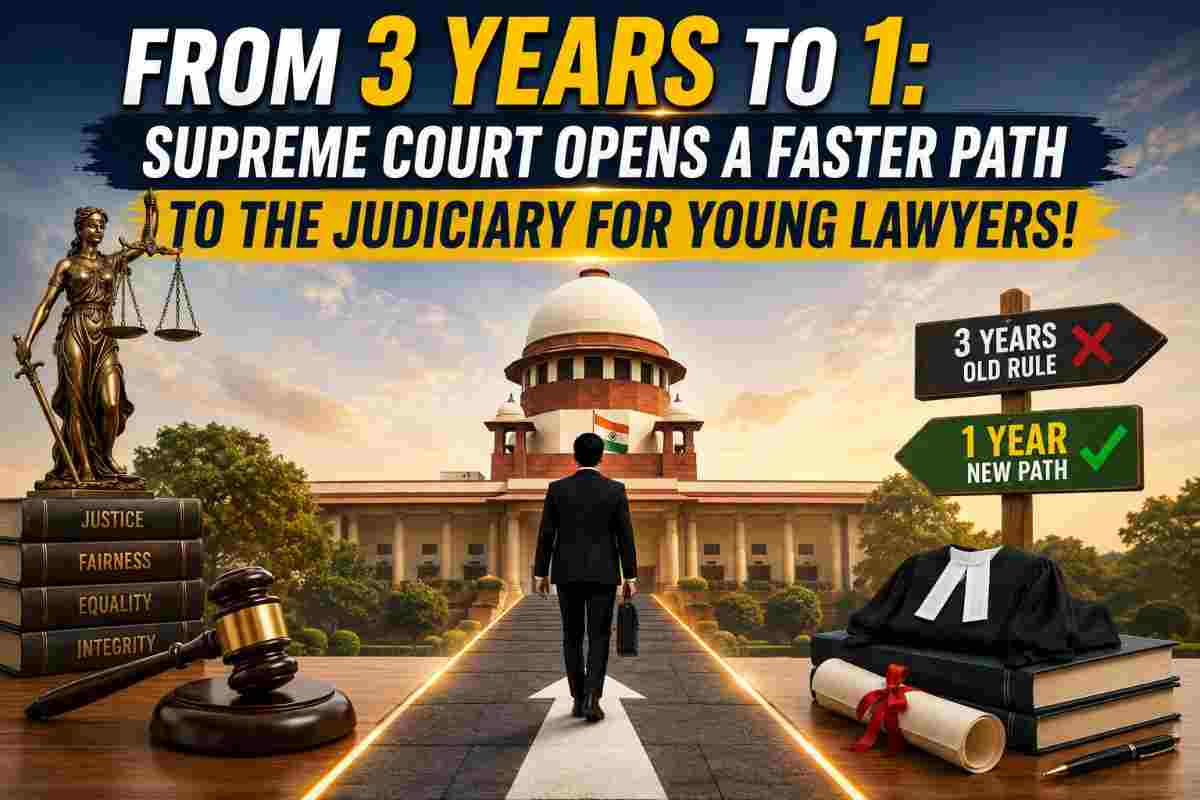
The Supreme Court has modified its 2025 three-year practice mandate for Civil Judge (Junior Division) recruitment and prescribed one year of active practice, with a special transition arrangement up to March 31, 2027.
Why in News?
The Supreme Court has delivered its judgment on the review petitions challenging its May 20, 2025 decision, which had made three years of legal practice mandatory before a candidate could appear for recruitment to the post of Civil Judge (Junior Division).
The 2025 ruling had created considerable concern among fresh law graduates and judicial-service aspirants because they would have to spend three years at the Bar before becoming eligible.
The review proceedings were heard by a Bench comprising Chief Justice of India Surya Kant, Justice Augustine George Masih and Justice K. Vinod Chandran. The judgment has now retained the basic idea that practical exposure to the legal profession is important, but has substantially modified the manner in which the requirement operates.
The new position :
- Three-year practice requirement has been reduced to one year.
- For judicial examination notifications issued from May 20, 2025 to March 31, 2027, candidates are allowed to apply without an actual prior-practice requirement.
- Such candidates will be treated as having completed one year of active practice for the purpose of eligibility.
- After selection, they will undergo one year of intensive training at the State Judicial Academy.
- This will be followed by one year of structured law clerkship.
- For notifications issued on or after April 1, 2027, candidates will require one year of active practice before appearing.
- After selection, they will undergo one year of training + one year of clerkship.
The Court therefore has not completely removed the importance of practical legal experience; instead, it has created a more balanced practice + institutional training + judicial clerkship model.
---
The main legal question was:
Whether the Supreme Court should continue with its May 20, 2025 direction requiring three years of legal practice before a candidate can appear for the Civil Judge (Junior Division) examination, or whether the requirement should be modified to avoid hardship to young law graduates.
The Court had to balance two competing considerations:
1. Judicial competence: A person entering judicial service should understand courtroom practice, advocacy and the practical functioning of the justice system.
2. Access to judicial service:A lengthy waiting period should not unnecessarily discourage talented law graduates from joining the judiciary, particularly when institutional training can provide practical judicial exposure.
The majority found that the foundational reasoning of the 2025 judgment did not require interference—prior exposure to the legal profession is valuable. However, the experience requirement must have a reasonable nexus with the objective sought to be achieved and should not create unnecessary hardship.
Background
Imagine a law student finishing an LL.B. and dreaming of becoming a Civil Judge. Under the position that existed after the Supreme Court's May 20, 2025 judgment, that student could not immediately compete for the Civil Judge (Junior Division) examination. The student first had to acquire three years of practice.
The 2025 judgment had restored the three-year practice requirement after the Supreme Court reconsidered its earlier 2002 position that had permitted fresh law graduates to enter the lower judiciary without prior Bar experience. The Court considered courtroom exposure important for judicial maturity and practical understanding.
But soon, concerns were raised.
Young graduates argued that three years at the Bar could discourage talented candidates from choosing judicial service. During the review proceedings, arguments were also advanced regarding the effect of the rule on women, persons with disabilities and graduates who might find it difficult to sustain themselves during the early years of legal practice. Senior Advocates Pinky Anand and Colin Gonsalves argued that stronger institutional training could provide the necessary practical exposure after recruitment.
The Supreme Court then examined whether the three-year period itself was the only way to achieve the objective.
The Court ultimately took a middle path.
It did not reject the principle that a judicial aspirant should have exposure to the legal profession. Instead, the majority reduced the prior practice requirement to one year for future recruitment and introduced a detailed training and clerkship structure.
For the transitional period covering notifications issued from May 20, 2025 until March 31, 2027, the Court provided even greater relief. Eligible law graduates can apply without producing proof of prior practice and will be deemed to have completed one year of active practice for this limited purpose.
Once selected, they will not immediately function as regular judicial officers. They will first become Trainee Judicial Officers and undergo one year of intensive training at the concerned State Judicial Academy.
After that, they must complete another one year of structured law clerkship. The first six months will be spent under the supervision of the Principal District Judge or members of the Higher Judicial Service, while the next six months will be under sitting judges of the concerned High Court.
The system also provides remuneration during the trainee period and an evaluation report after completion of the clerkship. A sitting High Court judge supervising the trainee will submit a reasoned report regarding the trainee's progress and suitability.
Thus, the Court has effectively shifted the emphasis from “three years of practice before examination” to a combination of limited prior practice, intensive judicial training and supervised practical experience.
For notifications issued on or after April 1, 2027, one year of actual active practice will be compulsory, and the practice will have to be verified through the prescribed mechanism/certificate.
Landmark Cases
All India Judges' Association v. Union of India — 1993
All India Judges' Association v. Union of India, AIR 1993 SC 2493; (1993) 4 SCC 288.
The Supreme Court had earlier treated a minimum period of legal practice as an important qualification for entry into the lower judiciary. The Court emphasised the special nature of judicial service and the importance of practical legal experience. ([Indian Kanoon][3])
Importance:This decision formed an important historical foundation for the practice requirement.
All India Judges' Association v. Union of India — 2002
All India Judges' Association v. Union of India, AIR 2002 SC 1752; (2002) 4 SCC 247
This was a major turning point. Relying upon the recommendations of the Shetty Commission and considering the need to attract talented young law graduates, the Supreme Court directed that fresh law graduates should be eligible to compete for entry-level judicial service without a mandatory three-year Bar practice requirement.
Importance: The 2025 judgment subsequently revisited and reversed this position on the requirement of prior practice.
---
All India Judges Association & Ors. v. Union of India & Ors. — 2025
All India Judges Association & Ors. v. Union of India & Ors.
The Supreme Court restored the three-year practice requirement for candidates seeking direct recruitment as Civil Judges (Junior Division). It held that practical experience at the Bar was important before assuming judicial office. The Court also recognised relevant experience as a law clerk to a Judge/Judicial Officer for the prescribed experience.
Importance: This is the immediate judgment that triggered the present review proceedings.
Bhumika Trust v. Union of India & Connected Cases
The review proceedings examined the operation of the three-year practice requirement, including concerns relating to young graduates and persons with disabilities. The Court allowed the review petitions to be heard in open court—an unusual step because review petitions are ordinarily considered in chambers.
Importance: These proceedings resulted in the present modification of the earlier three-year framework.
Better-prepared trial judges
Civil Judges deal with the majority of ordinary people's cases. Better practical exposure and structured training can help newly appointed judges understand:
- courtroom procedure
- evidence and pleadings,
- conduct of advocates,
- trial management,
- judicial ethics, and
- practical difficulties faced by litigants.
Faster entry of talented graduates
Reducing the pre-examination practice requirement from three years to one year may make judicial service more attractive to talented law graduates.
Greater institutional training
The judgment gives considerable importance to **Judicial Academy training and supervised clerkship**, rather than relying exclusively on years spent at the Bar.
Balance between experience and opportunity
The Court has attempted to strike a balance: experience should matter, but the requirement should not become an unnecessary barrier to judicial service.
Exam Snapshot — Judiciary / UPSC
Q. Which post is involved?
Civil Judge (Junior Division) / entry-level judicial service.
Q. What was the 2025 requirement?
Three years of legal practice before appearing for the examination.
Q. What is the modified requirement?
One year of active practice for notifications issued on or after April 1, 2027.
Q. What is the transition period?
May 20, 2025 to March 31, 2027.
Q. Is actual practice required during the transition period?
No. Eligible candidates are deemed to have completed one year of active practice for the purpose of application.
Q. What happens after selection?
One year intensive training + one year structured law clerkship.
Q. Who supervises the clerkship?
First six months: Principal District Judge/Higher Judicial Service officers.
Next six months: Sitting High Court Judges.
Q. What was the 2002 landmark case?
All India Judges' Association v. Union of India, AIR 2002 SC 1752; (2002) 4 SCC 247.
Q. What was the 2025 case?
All India Judges Association & Ors. v. Union of India & Ors., 2025 INSC 735; 2025 SCC OnLine SC 1184.
One-line exam formula:
1993 → 3 years practice recognised → 2002 → fresh graduates permitted → 2025 → 3 years restored → 2026 → 1 year practice + structured training/clerkship model.
Conclusion
“The Supreme Court has retained the principle of practical legal exposure for entry into judicial service, but has reduced the pre-recruitment practice requirement and strengthened institutional training and supervised clerkship.”
HINDI SECTION
सुप्रीम कोर्ट का बड़ा फैसला: न्यायिक सेवा के लिए 3 साल की प्रैक्टिस घटकर 1 साल हुई, 31 मार्च 2027 तक विशेष छूट
सुप्रीम कोर्ट ने Civil Judge (Junior Division) बनने के लिए 2025 में तय की गई तीन साल की प्रैक्टिस की शर्त को बदलकर भविष्य में **एक साल की सक्रिय प्रैक्टिस** कर दिया है और 31 मार्च 2027 तक के लिए विशेष संक्रमण व्यवस्था दी है।
खबरों में क्यों?
20 मई 2025 को सुप्रीम कोर्ट ने Civil Judge (Junior Division) की परीक्षा में बैठने के लिए **तीन साल की कानूनी प्रैक्टिस** को अनिवार्य किया था।
इस फैसले के बाद बहुत से नए Law Graduates और Judiciary Aspirants के सामने समस्या खड़ी हो गई थी। LL.B. पूरा करने के बाद वे तुरंत Judicial Service Examination नहीं दे सकते थे। उन्हें पहले तीन साल तक Bar में Practice करनी पड़ती।
इस फैसले को लेकर Review Petitions दाखिल हुईं।
सुप्रीम कोर्ट ने इस मामले में सुनवाई की और अब तीन साल की अवधि को बदल दिया है। Court ने कहा कि Judicial Service में आने वाले व्यक्ति को Legal Profession का practical exposure मिलना जरूरी है, लेकिन इसके लिए तीन साल की अनिवार्य अवधि ही एकमात्र रास्ता नहीं है।
अब एक साल की Practice + एक साल की Judicial Academy Training + एक साल की Structured Clerkship का मॉडल सामने आया है।
मुख्य सवाल था:
क्या Civil Judge (Junior Division) की परीक्षा में बैठने से पहले तीन साल की कानूनी प्रैक्टिस अनिवार्य रहनी चाहिए, या युवा Law Graduates को राहत देते हुए इस अवधि को कम किया जाना चाहिए?
Court के सामने दो महत्वपूर्ण बातें थीं।
पहली बात — Experience जरूरी है
Judge बनने वाले व्यक्ति को केवल किताबों का ज्ञान नहीं होना चाहिए। उसे Courtroom, Lawyers, Evidence, Pleadings और वास्तविक मुकदमों की प्रक्रिया की जानकारी भी होनी चाहिए।
दूसरी बात — बहुत लंबी Practice से नुकसान
यदि तीन साल तक Practice अनिवार्य कर दी जाए, तो कुछ प्रतिभाशाली Law Graduates Judiciary में आने का विचार छोड़ सकते हैं।
इसलिए Court ने दोनों बातों के बीच संतुलन बनाने की कोशिश की।
पूरी कहानी
मान लीजिए एक विद्यार्थी ने LL.B. की पढ़ाई पूरी की। उसका सपना है कि वह Civil Judge बने।
पहले की व्यवस्था में वह Law Degree पूरी करने के बाद Judicial Service Examination की तैयारी कर सकता था। लेकिन 20 मई 2025 के Supreme Court judgment के बाद स्थिति बदल गई। Civil Judge (Junior Division) की परीक्षा में बैठने से पहले तीन साल की legal practice जरूरी कर दी गई।
इसका मतलब था कि एक fresh law graduate को पहले तीन साल तक Advocate के रूप में काम करना पड़ता और उसके बाद ही वह परीक्षा के लिए eligible होता। 2025 के फैसले में Court ने माना कि Judge बनने से पहले practical legal experience उपयोगी है।
लेकिन इसके बाद कई सवाल उठे।
क्या हर युवा graduate के लिए तीन साल तक litigation में टिके रहना आसान है?
क्या आर्थिक रूप से कमजोर विद्यार्थी ऐसा कर पाएगा?
क्या इससे अच्छे और प्रतिभाशाली graduates Judiciary से दूर हो सकते हैं?
Review proceedings में इन समस्याओं को Supreme Court के सामने रखा गया। यह भी कहा गया कि Judicial Academies में मजबूत institutional training देकर नए Judges को जरूरी practical knowledge दिया जा सकता है।
अब Supreme Court ने बीच का रास्ता अपनाया है।
Court ने यह नहीं कहा कि legal experience बेकार है। बल्कि Court ने prior legal exposure के महत्व को बरकरार रखा। लेकिन तीन साल की अवधि को कम करके एक साल कर दिया।
सबसे महत्वपूर्ण राहत उन candidates के लिए है जिनकी recruitment notification 20 मई 2025 से 31 मार्च 2027 के बीच जारी होगी।
ऐसे candidates को actual prior practice दिखाने की जरूरत नहीं होगी। उन्हें application के उद्देश्य से एक साल की active practice पूरी करने वाला माना जाएगा।
Selection के बाद उनकी journey सीधे regular Judge के रूप में शुरू नहीं होगी।
उन्हें पहले Trainee Judicial Officer बनाया जाएगा।
फिर उन्हें State Judicial Academy में एक साल की intensive training करनी होगी।
इसके बाद एक साल की structured law clerkship होगी।
इस clerkship के पहले छह महीने Principal District Judge या Higher Judicial Service के सदस्यों की supervision में होंगे। अगले छह महीने संबंधित High Court के sitting Judges की supervision में होंगे।
Training और clerkship के दौरान उन्हें निर्धारित emoluments भी मिलेंगे और अंत में उनकी suitability तथा progress का evaluation report तैयार किया जाएगा।
इसके बाद,1 अप्रैल 2027 या उसके बाद जारी होने वाली notifications के लिए candidate को परीक्षा में बैठने से पहले **एक साल की वास्तविक active practice पूरी करनी होगी।
इस प्रकार Supreme Court ने तीन साल की पुरानी व्यवस्था को पूरी तरह जारी रखने के बजाय **एक साल की Practice + एक साल की Training + एक साल की Clerkship** की नई व्यवस्था बनाई है।
लैंडमार्क केस
All India Judges' Association v. Union of India — 1993
All India Judges' Association v. Union of India, AIR 1993 SC 2493; (1993) 4 SCC 288.
इस मामले में Supreme Court ने Judicial Service की विशेष प्रकृति पर जोर दिया और निचली न्यायपालिका में प्रवेश के लिए न्यूनतम कानूनी प्रैक्टिस के महत्व को स्वीकार किया। ([Indian Kanoon][3])
महत्व:यही वह महत्वपूर्ण पृष्ठभूमि है जिससे तीन साल की practice requirement का आधार मजबूत हुआ।
---
All India Judges' Association v. Union of India — 2002
All India Judges' Association v. Union of India*, AIR 2002 SC 1752; (2002) 4 SCC 247.
यह फैसला बहुत महत्वपूर्ण था। Supreme Court ने Shetty Commission की recommendations को ध्यान में रखते हुए fresh law graduates को भी entry-level Judicial Service में आने का अवसर दिया। तीन साल की Bar Practice को अनिवार्य नहीं रखा गया।
महत्व:2002 के इस फैसले में fresh graduates के लिए Judiciary का रास्ता खुला था।
All India Judges Association & Ors. v. Union of India & Ors. — 2025
All India Judges Association & Ors. v. Union of India & Ors.,
इस फैसले में Supreme Court ने Civil Judge (Junior Division) की recruitment के लिए **तीन साल की practice requirement फिर से लागू कर दी।
Court ने माना कि Judge बनने से पहले legal profession का practical exposure महत्वपूर्ण है।
महत्व:वर्तमान 2026 review judgment इसी 2025 के फैसले को modify करता है।
Bhumika Trust v. Union of India & Connected Cases
इस proceeding में तीन साल की practice requirement को लेकर Review Petitions और विशेष रूप से young graduates तथा persons with disabilities से जुड़े concerns पर विचार हुआ। Supreme Court ने review matters को open court hearing के लिए अनुमति दी, जो सामान्य review procedure की तुलना में असाधारण कदम था।
महत्व: इसी review process में वर्तमान modified framework सामने आया।
बेहतर तरीके से तैयार Judges
Judicial Academy और supervised clerkship के कारण नए Judges को practical court functioning का बेहतर अनुभव मिल सकता है।
प्रतिभाशाली युवाओं को अवसर
तीन साल की अनिवार्य Practice हटाकर एक साल करने से अधिक Law Graduates Judiciary की ओर आकर्षित हो सकते हैं।
Trial Courts मजबूत हो सकती हैं
Civil Judge स्तर पर आम नागरिकों के बहुत से मुकदमे आते हैं। यदि नए Judges को अच्छी training मिले, तो इसका सकारात्मक प्रभाव trial-level justice पर पड़ सकता है।
Practice और Training का संतुलन
Court ने यह संदेश दिया है कि experience जरूरी है, लेकिन experience की अवधि इतनी लंबी नहीं होनी चाहिए कि वह Judiciary में entry की बाधा बन जाए।
परीक्षा के लिए मुख्य बिंदु — Judiciary / UPSC
प्रश्न: यह फैसला किस पद से संबंधित है?
Civil Judge (Junior Division).
प्रश्न: 2025 में कितनी Practice जरूरी की गई थी?
तीन साल।
प्रश्न: अब कितनी Practice जरूरी होगी?
1 अप्रैल 2027 से जारी notifications के लिए **एक साल की active practice।
प्रश्न: Transition Period क्या है?
20 मई 2025 से 31 मार्च 2027 तक।
प्रश्न: Transition Period में actual practice जरूरी है?
नहीं। Eligible candidates को application के लिए एक साल की active practice पूरी करने वाला माना जाएगा।
प्रश्न: Selection के बाद क्या होगा?
एक साल Judicial Academy Training + एक साल Structured Clerkship.
प्रश्न: Clerkship के पहले छह महीने किसके supervision में होंगे?
Principal District Judge / Higher Judicial Service के सदस्य।
प्रश्न: अगले छह महीने किसके supervision में होंगे?
संबंधित High Court के Sitting Judges।
सबसे आसान Revision Formula:
1993 → Practice का महत्व
2002 → Fresh Graduates को मौका
2025 → 3 साल Practice फिर से अनिवार्य
2026 → 1 साल Practice + 1 साल Training + 1 साल Clerkship
निष्कर्ष:
“Judge बनने से पहले अनुभव जरूरी है, लेकिन अब तीन साल की Practice के बजाय एक साल की Practice और उसके बाद मजबूत Training तथा Clerkship पर ज्यादा जोर दिया गया है।”