Cyber Crime in India: Laws, Punishments & Prevention
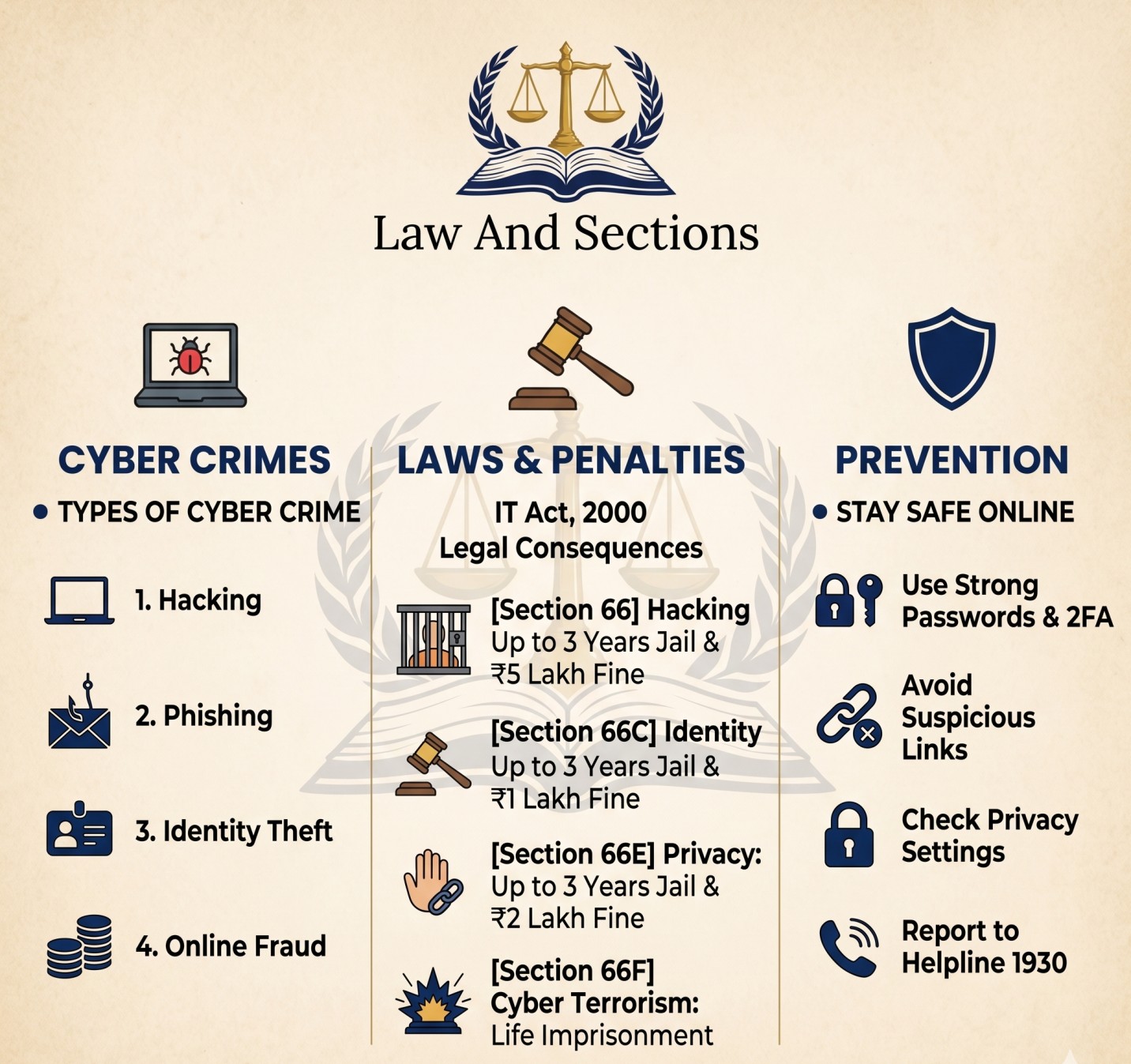
In today's digital world, students like you use smartphones, laptops, and the internet every single day. You study online, chat with friends on WhatsApp and Instagram, shop, play games, and share photos and videos. Technology has made life easier and more fun. However, along with these benefits, there is also a dark side — cyber crimes. These are illegal activities done using computers, smartphones, or the internet.
What is Cyber Crime?
Cyber crime means any wrong or illegal act that happens in the online world. It can involve stealing money, personal information, or harming someone emotionally. Some common examples that students should know are:
1.Hacking: When someone secretly breaks into your email, social media, or bank account without permission.
2.Phishing: Fraudsters send fake messages or emails that look real and trick you into sharing your password, OTP, bank details, or other personal information.
3.Cyber Bullying and Stalking: Teasing, threatening, or repeatedly harassing someone online, or following them on social media.
4.Identity Theft: Using someone else’s name, photos, Aadhaar number, or details to cheat others.
5.Online Fraud: Fake shopping websites, investment scams, or lottery frauds that take away your hard-earned money.
6.Revenge Porn or Privacy Violation: Sharing private photos or videos of someone without their consent.
These crimes are increasing rapidly in India because more and more students are active online. Anyone can become a victim, but being aware is the first step to staying safe.
Main Law: Information Technology (IT) Act, 2000
India has a special law to fight cyber crimes called the Information Technology Act, 2000 (IT Act). This law was created to give legal recognition to electronic records, digital signatures, and online transactions. It was amended in 2008 to include stronger provisions for new types of cyber crimes like identity theft, cyber terrorism, and privacy violations.
The IT Act works together with other laws such as the Bharatiya Nyaya Sanhita (the new criminal law that replaced the old IPC) for cases involving fraud, defamation, or other traditional crimes. This law applies all over India and even covers crimes committed from foreign countries if they affect Indian citizens.
Important Sections and Punishments
The IT Act clearly mentions different cyber crimes and their punishments. Here are some key ones explained in easy words:
Section 66 (Hacking / Computer-related offences): If someone hacks or causes damage dishonestly, they can be punished with up to 3 years in jail and/or a fine up to ₹5 lakh.
Section 66C (Identity Theft): Stealing someone’s digital identity (password, Aadhaar, etc.) — up to 3 years jail and/or fine up to ₹1 lakh.
Section 66D (Cheating by Personation): Pretending to be someone else online to cheat people — up to 3 years jail and/or fine up to ₹1 lakh.
Section 66E (Violation of Privacy): Capturing or sharing private images/videos without consent — up to 3 years jail and/or fine up to ₹2 lakh.
Section 66F (Cyber Terrorism): Serious attacks that threaten the country’s security or economy — punishment can be life imprisonment.
Section 67 (Publishing obscene material): Sharing vulgar or indecent content online — imprisonment from 3 to 5 years and fine.
Other sections like Section 65 (tampering with computer source documents) also carry up to 3 years imprisonment and fines. Special cyber crime police cells investigate these cases quickly. Courts take these matters seriously and punishments can include both jail time and heavy fines.
Important Note: Section 66A, which was earlier used for offensive messages, was removed by the Supreme Court as it was being misused.
Easy Prevention Tips
Prevention is always better and easier than facing the problem later. Here are some simple and practical tips that every student can follow:
Strong Passwords and 2FA: Always use long, strong passwords with letters, numbers, and symbols. Never use the same password for all accounts. Turn on two-factor authentication (2FA) everywhere possible.
Be Careful with Links and Messages: Never click on suspicious links or download attachments from unknown people. Fake messages often create urgency like “Your account will be blocked!”
Privacy Settings: Keep your social media accounts private. Do not accept friend requests from strangers. Avoid sharing your location, phone number, or personal photos publicly.
Updates and Security: Always keep your phone, apps, and software updated. Use reliable antivirus software.
Public Wi-Fi Caution: Avoid doing online banking or entering important passwords on free public Wi-Fi.
Report Immediately: If you face any problem, tell your parents or teachers right away. You can report on the official website cybercrime.gov.in or call the National Cyber Crime Helpline 1930. Quick reporting can help freeze stolen money and catch the criminals.
Parents and teachers should also talk openly with students about online safety.
Conclusion
Cyber crimes are a big challenge in today’s digital India, but the government has strong laws like the IT Act to punish the offenders. As students, you are smart and capable — by staying aware, following safety rules, and using technology responsibly, you can enjoy the internet without fear. Remember, your safety is in your hands. Be alert, think before you share, and help spread awareness among your friends too.
Stay safe online!